The two-millennia history of the Church has recorded many outstanding missionaries; yet only a small number of them have been granted the specific epithet—strategist. This descriptive title belongs exclusively to those Christian missionaries whose activity was conceived in such a way that it was both inventive in approach and comprehensive in its conceptual scope. Undoubtedly, the first (and at the same time the greatest) strategist of Christian mission of all time is the Holy Apostle Paul, who, in a certain sense, stands as the paradigm of Christian missionary work. His address at the Areopagus (cf. Acts 17:18–34), whose introduction brilliantly opened the way for his further preaching to the Gentiles, constituted the first strategic “manoeuvre” in the history of Christian mission, demonstrating the necessity of taking into account the cultural context of a given environment if the proclamation of Christ Crucified and Risen is to be effective. I have become all things to all people… (1 Cor. 9:22) has remained to this day one of the principal maxims of the Church’s mission.
Almost all Orthodox peoples have had their own missionary strategists. Among the Greeks [that is, the Orthodox Hellenes], the most eminent were certainly the Slavic enlighteners, Saints Cyril and Methodius, Equals-to-the-Apostles. They were the conceptual architects of the so-called incarnational missionary approach, which begins with the use of the local language of the people to whom the Gospel is proclaimed (that is, its use in liturgical worship and in the translation of the Holy Scriptures), while at the same time selecting clergy from among the most distinguished local converts. In a time when Ancient Greek and Latin functioned as a kind of “standard” (as English does today on a global level), the approach of the Holy Brothers was exceedingly innovative and remarkably effective. In subsequent centuries, their method proved highly applicable and was quickly adopted by the majority of Orthodox missionaries.
At the time when the Eastern Roman [Byzantine] Empire was disappearing from the historical stage, Orthodox Russians emerged with their great missionary strategists, among whom we shall highlight three figures. The first is Saint Macarius (Glukharev), remembered as the first Orthodox theoretician of mission, but also as a highly compelling “practitioner,” since he introduced the principle that Christianity should first be preached through good deeds and service to the needs of non-Christians, and only thereafter by word (in this regard, he built more schools and hospitals for the Altai peoples than churches). The second is Saint Innocent (Veniaminov), the enlightener of Alaska and Siberia, who began his mission among the Aleut peoples already as a parish priest and, even then, achieved remarkable missionary breakthroughs and strategies. He is remembered for his use of various secular skills and forms of knowledge, as well as for his exceptional intellectual capacities, which greatly aided his work. The third is Saint Nicholas (Kasatkin), Equal-to-the-Apostles, the enlightener of Japan. By his example, he demonstrated the necessity of a perfect knowledge of the language and culture of the people to whom the Gospel is proclaimed before even embarking upon mission in the strict sense, while in the organizational sphere he advanced beyond the limits of previous missionary concepts, especially with regards to missionary structures and the early inclusion of local converts in missionary activity.
We Serbs, alongside the Greeks and Russians, can also take pride in two colossal strategists in the field of the Church’s mission. The first and greatest Serbian strategist of mission was Saint Sava, Equal-to-the-Apostles, who laid firm foundations in the domain of the fundamental evangelization of the Serbian people—foundations upon which the autocephalous Serbian Church was built. At the same time, he clearly defined the spiritual and value-based coordinates by which the Serbian people have recognized their identity over the centuries. The second brilliant Serbian missionary strategist was Saint Nikolai of Zica and Ohrid, Equal-to-the-Apostles and spiritual leader of the Bogomoljci prayer movement between the two World Wars. This Chrysostom-like preacher continues to missionize through his writings of enduring value, while inspiring church shepherds through practical approaches to enlightening the people with the teaching of Christ.
When speaking of great missionary strategists, one might assume that this theme belongs to times long past; yet this is a grave misconception. Precisely the apocalyptic age in which we live has produced no fewer than three immensely significant figures of this kind. Interestingly, all three have departed from us within the past seven years. The first to pass into eternity was the Athonite monk Ephraim (Moraitis), the new enlightener of America, who reposed at the end of 2019. Ephraim’s missionary method was based on the union of hesychia and mission, and in practice was directed towards bearing witness to the ascetical Athonite spirit within the Western consumerist world. The monastic communities he established in the United States radiated the Athonite ethos—vigils, the prayer of the heart, and ascetic struggle—and attracted thousands of Americans thirsting for the living water (cf. John 4:10; 7:37–38). Last year, the second Equal-to-the-Apostles strategist of mission in our time departed from us: Archbishop Anastasios (Yannoulatos), a man who demonstrated not only outstanding results through thoughtful and self-sacrificial missionary work in Africa and later in Albania, but who also gave missionary activity a profound theological articulation. His deep thought has become a foundation of contemporary Orthodox missiology, and his life an exemplar of missionary service to Christ. The third contemporary giant of mission was the blessed Catholicos-Patriarch of Tbilisi and All Georgia, Ilia II (Shiolashvili). His repose this year simultaneously marked the moment when the last great strategist of the Church’s mission, who lived and laboured at the threshold between two millennia, departed from us.
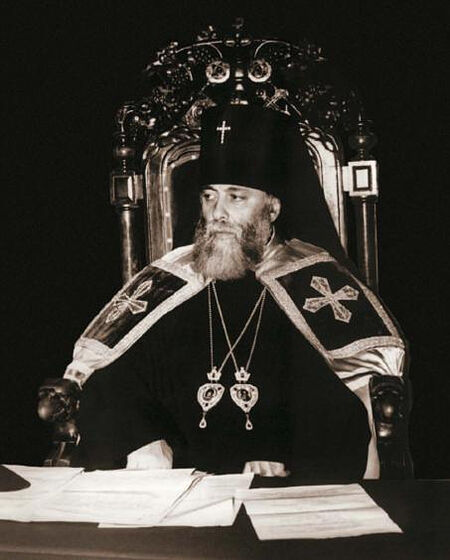
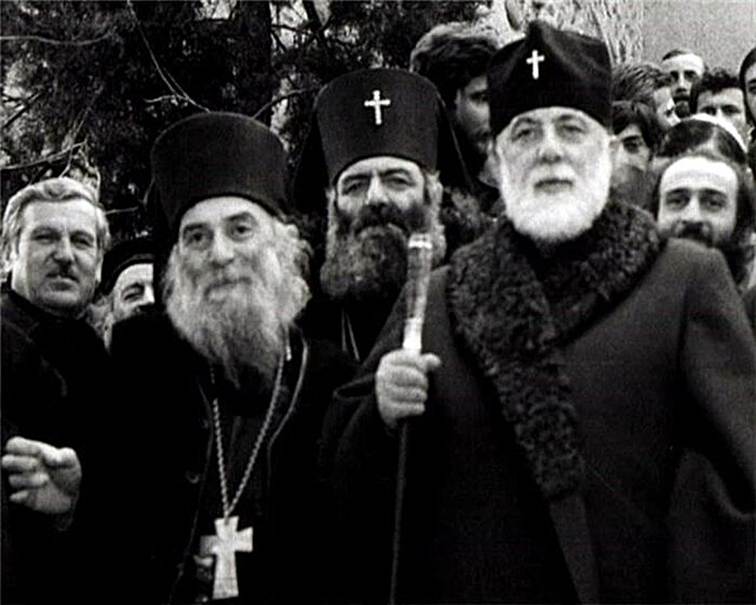
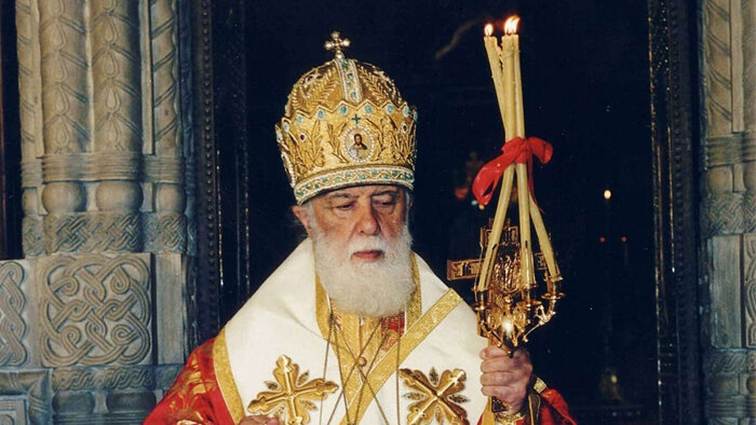
As one who has been actively involved for nearly two decades in various missionary activities of the Serbian Orthodox Church, and at the same time a admirer of the person and work of the blessedly reposed Georgian Patriarch Ilia II, the author of this text has felt both a missionary obligation and a personal need to sketch in the following lines the missionary profile and legacy of this spiritual giant of our time, and to try to answer the question: what made the late Georgian Patriarch Ilia II par excellence a missionary strategist of our time?
Deep Faith – Fervent Prayer – Virtuous Life
What primarily adorned the Georgian Patriarch Ilia was the depth of his faith, from which there proceeded an equally profound prayer, both of which were consistently accompanied by a life of virtue. In this, he is identical with all the great missionaries of the Church, whose lives demonstrate that without the sacred triad of faith–prayer–virtue there can be no authentic mission. If we seek the foundation of the success of the missionary activity that Patriarch Ilia carried out in his homeland, it is fulfilled precisely in this combination—the Georgian people followed him in great numbers because they recognized in him a true rule of life in Christ.
Patriarch Ilia acquired this sacred triad of faith–prayer–virtue already within the context of his family. His father, Giorgi, was a particularly important figure in this regard, not only as an example, but also as a man to whom God revealed great plans for his son Irakli, the future Patriarch Ilia II. From the Patriarch’s own testimony, we learn that his father Giorgi had a special vision in a dream, in which the Lord Jesus Christ turned towards Irakli and addressed him with the words: “You are obliged to bring your people to Christianity.” The Patriarch preserved this in his heart throughout his life as a reflection of the command of the missionary task set before him, and we would not be mistaken in asserting that his later enthusiasm in enlightening the Georgian people was, to a significant extent, inspired by this very event.
This was not the only sign of a grace-filled calling—after the ordination of the monk Ilia to the rank of hierodeacon (on Great Thursday in 1957), another noteworthy event occurred. On that day, the newly ordained hierodeacon did not wish to leave the altar at all and remained there for several hours after the Divine Liturgy. His God-seeking mind had clearly found delight in abiding within a space that is, by its very nature, designated for prayer and contemplation of God. When he finally left the altar and approached the Cross of Saint Nina, Equal-to-the-Apostles, he caught the vigil lamp with his kamilavka, and all the oil from it was poured over his head. In a most remarkable way, this seemed to foreshadow that he would have a great ministry as a divinely anointed spiritual leader of the Georgian people.
When we observe the footage of the enthronement of Patriarch Ilia II (when he had only reached the age of 44), in his gaze and movement we perceive a noetic standing before God and a flame of prayer that had been acquired over many years. A man of such firm manifestation, reflecting a state of fiery spirit (which fully corresponded to the name of the fiery Prophet that he received at his monastic tonsure), was entirely prepared to warm the hearts of his people and to become a Georgian Moses (a title that was bestowed upon him already during his lifetime).
The triad of faith–prayer–virtue was the hallmark of Patriarch Ilia, accompanying him throughout his patriarchal ministry. Metropolitan Andrew of Samtavisi and Gori (Gvazava) testifies to what he personally witnessed—that Patriarch Ilia began every morning with a supplicatory service (moleben) to the saint commemorated on that day, that he was present at every evening service in the church, and that after the construction of the Church of the Holy Prophet Elijah within the patriarchal complex, he attended daily the liturgical services served by his clergy. The Patriarch himself regularly celebrated the Divine Liturgy, even in periods when he moved with difficulty due to old age. It was precisely this prayerfulness that enabled Patriarch Ilia II to become a spiritual magnet for everyone who came into contact with him, causing that “a person beside him feels peace, serenity, and joy” (to quote Metropolitan Andrew). Such a spiritually strong man is, in himself, a mission – even when he remains silent.
Let us cite one characteristic thought of Patriarch Ilia II, which reveals his understanding of faith: “For faith, it is not dangerous to be denied by polemics, nor is it dangerous to be tested by our mind or knowledge—this testing it has endured throughout the centuries and will endure today as well. What is dangerous to it is the weakness of our spirit, indifference, our lukewarmness. The indifference of believers is a far more terrible thing than the fact that there are unbelievers.” This is a very important thought for our topic, as it reveals the depth of the experience of Christian faith imbued with a missionary spirit. The inner fervour of faith possessed by Ilia II is a pure spiritual reflection of the Lord’s words: I came to send fire on the earth, and how I wish it were already kindled! (Lk 12:49). This fervour is something that we (let us note this quite openly and sincerely) so often lack today, due to the general lukewarmness and indifference that have prevailed—conditions entirely contrary to the apostolic spirit.
As emphasized, the faith and prayerfulness of the great Patriarch were fully followed by his way of life. Those who knew him testify that he radiated goodness and active love, purified from the admixture of self-love. This was most clearly manifested in his relationship towards the countless people on the margins of Georgian society—the homeless, the suffering, prisoners, the despairing—with whom he was constantly in contact and who found in him great support in their afflictions and distress. Alongside love and goodness, however, Patriarch Ilia possessed yet another particularly prominent quality: meekness. In this regard, the Lord’s word was fulfilled in him in a most remarkable way: Blessed are the meek, for they shall inherit the earth (Mt 5:5), for by his meekness he won over the entire Georgian people, and Georgia as a land was spiritually brought into obedience to him in the Name of Christ. Yet he departed from meekness in one case—when confronted with those who betrayed God, the Church, and the homeland. Towards them he was exceedingly strict and, as he himself states, “unyielding,” until they offered sincere repentance.
And if there is a word of the Lord from the Gospel that was fully fulfilled in the great Georgian Primate, it is that a city set on a hill cannot be hidden (Mt 5:14)—Ilia II, by his very presence, was a lamp in the darkness of the communist, and later post-communist, Georgian society.
An Inventive Approach to Internal Mission
Patriarch Ilia demonstrated immense success primarily in the field of the Church’s internal mission, for (in accordance with the vision his father had received) he understood his ministry as a task of the re-Christianization of Georgia. At the time when he was tonsured a monk (on Great Tuesday in 1957) in the Church of Saint Alexander Nevsky in Tbilisi, not a single Georgian was present at his tonsure. The reason was profoundly discouraging: at that time, under the influence of the godless Soviet dictatorship, the number of people participating in church life had fallen to an absolute minimum. He was elevated to the throne of the Georgian Patriarchs two decades later, on the eve of the final decade of the Soviet Union, during which the pressure upon the Church was still intense. When the anti-Christian Soviet construct finally collapsed, new challenges followed: social upheavals, civil war, a severe economic crisis, and the subversive activity of so-called non-governmental organizations. It was precisely in such difficult and complex social circumstances that Patriarch Ilia accomplished the spiritual renewal of his country to such an extent that he was called the Georgian Moses, and that all Georgians came to perceive him as the Spiritual Father of the nation and the most beloved person in the entire state, whose authority in society none could rival.
And the light shines in the darkness, and the darkness did not overcome it (Jn 1:5)—these words, in an indirect sense, strongly remind us of the mission of Patriarch Ilia II. Namely, he himself characterized his patriarchal ministry as a “sunlit night,” because that period was exceedingly cross-bearing and difficult for the Georgian people and state, filled with trials and sufferings, yet at the same time illumined by faith and grace from above. Thus, the great Georgian hierarch demonstrated in the clearest possible way that it is a profound delusion to wait for better times for the mission of the Church. No, on the contrary: every time, no matter how complex and difficult, is ideal for the Church’s mission. Not only that—difficult and complex times are particularly favourable for Christian mission, as they turn people towards spiritual questions, about which they reflect little in an environment of constant material comforts. A clearly visible symbol of such activity by Patriarch Ilia is the construction of the magnificent Cathedral of the Holy Trinity in Tbilisi, one of the most beautiful in the entire Orthodox world. This cathedral was built during the greatest economic crisis in Georgia, and few believed that it would progress beyond its foundations. Yet the final result demonstrated that the miracles of mission are possible in every age, under one condition: that there exist firm faith and zeal for works according to that faith.
From the very beginning, Patriarch Ilia completely identified himself with his flock and became one with it. Characteristic in this regard are his moving words: “Once, in a sermon, I told our people that I do not know whether I am in Georgia or Georgia is in me.” His love for Georgia and the Georgian people was unquestionable, and people quickly noticed that Patriarch Ilia was never inclined to travel outside Georgia. This clearly indicated where his heart was—not in the sense of a conventional attachment to earthly reality, but in the sense of a calling to continually bind earthly Georgia to the Heavenly. As has been emphasized, this was his primary missionary task, to which he was devoted with his entire being.
Patriarch Ilia, moreover, demonstrated a strategic approach to mission already as a student of theology, when he wrote a letter with concrete proposals for action to Patriarch Melchizedek III. Later, when he became Patriarch, he established a special Department for Mission and Evangelization, which became an important pillar of various missionary programmes of a strategic nature. With regards to the missionary strategies he applied in the work of internal mission, the great Georgian Patriarch was characterized by an exceptionally broad perspective and an inventive approach. His missionary ideas, in their simplicity, applicability, and effectiveness, were such that in a very short period they brought immense spiritual freshness into Georgian society and continually renewed it. At the same time, the missionary approach of Patriarch Ilia demonstrated a markedly asymmetrical relationship between invested resources and achieved results.
Let us mention only a few examples of his missionary ideas, which required neither significant resources nor complex implementation, yet proved remarkably successful, since they were, in essence, based on direct messages addressed to the faithful people and the Georgian public at large. First of all, let us note his recommendation that (apart from the Paschal period, when the greeting Christ is Risen – Indeed He is Risen is used), all Georgians, when meeting one another, greet each other with: Christ is in our midst!, and respond with: He is and ever shall be! This greeting introduced a particular spiritual freshness and dynamism into the Georgian people. A similar effect occurred when the Patriarch, in one of his sermons, called upon Georgians to receive a blessing from their parents as soon as they meet them, which yielded exceptional results in the sphere of intra-family relations—as in the previous case, the missionary-pastoral message was clear, direct, meaningful, beneficial, and applicable, and ultimately highly effective. A similar effect was achieved by his call for all Georgians to send a letter with kind and edifying content to a neighbour of their choosing.
A special prayerful dynamism was introduced by the Patriarch’s initiative that arose immediately after he ascended Mount Sinai barefoot and, in a state of prayerful attentiveness, recalled the psalmic verse: Seven times a day I praise You for Your righteous judgments (Ps 119:164). Following this, he issued an appeal that every Orthodox Georgian should prayerfully turn to the Lord seven times a day, following the example of King David, and that on the radio, seven times daily, short segments of psalms should be broadcast. After such an initiative, Georgia, within a short time, began to spiritually “breathe” through the God-inspired verses. Similarly, his idea that on Christmas Eve Orthodox Georgians should stand at the windows of their homes holding lit candles brought a particular light into the life of this cross-bearing nation. A highly interesting and previously unseen missionary concept in the sphere of the prayerful revival of the people was implemented through the custom of bringing an ancient icon into a particular household for seven days, under one condition: that others may come to that home during the week and pray together before the icon. All these and similar missionary ideas of Patriarch Ilia kindled faith and prayerfulness among the Georgian people and caused the initial spark to grow into a grace-filled flame.
Patriarch Ilia II identified, as one of his most important missionary tasks, the liturgical enlightenment of the Georgian people and their attraction to the worship of God in Orthodox churches. In this regard, several decades ago, a leaflet containing excerpts from the liturgical services was widely printed, so that the people might become better acquainted with liturgical life. Additional services were also introduced in churches, such as prayers for children on Monday mornings, which further encouraged the faithful to attend the church. During the course of his patriarchal ministry, the number of priests and monks, as well as the number of churches and monasteries in Georgia, increased tenfold. The Patriarch also distinguished himself by supporting the more frequent celebration of the Divine Liturgy, which is yet another sign of his profound piety and spiritual rootedness in the Mystery of Mysteries. This is vividly illustrated by the fact that, about a decade ago, there were eight Orthodox churches in Tbilisi in which the Divine Liturgy was celebrated daily.
Among the inventive pastoral-missionary approaches of Patriarch Ilia, we may also mention some that are particularly endearing. One of these was his custom that, on his birthday (January 4), from morning until evening, anyone could come to the Patriarchate and receive his blessing. On that day (and sometimes throughout the entire following day), streams of people flowed into the Patriarchal building, forming lines so long that Georgians would wait for several hours to approach and venerate the holy right hand of the Primate. During this time, Patriarch Ilia would usually give blessings standing (often with the assistance of someone supporting him), and later seated, once he became fatigued from standing.
However, the most well-known and undoubtedly the most original missionary approach, by which Patriarch Ilia II will certainly remain remembered as a great missionary strategist, is his initiative from nearly two decades ago to become the godfather of every third and subsequent child. The Patriarch served as godfather at (collective) baptisms for approximately 50,000 Georgian children (!), which is an unprecedented case in the entire two-thousand-year history of the Orthodox Church. Following this initiative, the birth rate in Georgia increased significantly, while the number of abortions was reduced by half. Even if he had accomplished nothing else, Patriarch Ilia II would have deserved the epithet of a great missionary.
All of the above speaks not only of the remarkable inventiveness of Patriarch Ilia in terms of missionary methods within internal mission, but also of the very high degree of emotional and social intelligence with which he was endowed. This, at the same time, makes him not only a successful, but also a truly ingenious missionary.
Gaining the support of Georgia’s Scientific, Cultural, and Academic Elite
From the very beginning of his ministry, Patriarch Ilia clearly understood the importance of science for the development of modern Georgian society, and therefore gave full and active support to the advancement of Georgia’s scientific potential, while personally emphasizing the building of stable bridges between faith and science. As such, after some time, he was recognized by the academic community as an exceptionally authentic interlocutor, and was even elected an honorary member of the Georgian Academy of Sciences. He frequently participated in scientific conferences, which further reinforced his standing and authority in the scholarly world.
Let us hear what the late Patriarch Ilia II himself said about the need to recognize the importance of science for Georgian society: “The sphere of science has decisive importance for every country; enormous resources and much time are required to create scientific potential, and it would be an irreparable mistake if we were not to make use of the potential we already possess.” And here is how he, in a similar spirit, reflected on the relationship of the Church towards scientists: “It is a tradition of the Georgian Church to maintain good relations with scientists […]. For example, the president of the Georgian Academy of Sciences comes to visit us almost every week, as do professors. We do not speak only about scientific research, but also about their needs.”
Within his strategic conception of internal mission, the Patriarch identified work with the cultural, scientific, and educational elite of Georgian society as one of the key directions of activity. As a brilliant strategist of mission, he understood that if this segment of society were spiritually enlightened, it would be easier to enlighten the common people as well, towards whom that same elite is directed in its activity. In this regard, he renewed the practice whereby the Georgian Patriarch meets every Thursday in the Patriarchate building in Tbilisi with representatives of the scientific, educational, and cultural circles of Georgian society, engaging them in discussions on various topics. The main themes of these meetings were, of course, directly or indirectly related to concrete questions concerning the relationship between faith and science, though over time they broadened to include spiritual dilemmas more generally. Moreover, as those familiar with these encounters testify, the Patriarch showed great understanding even towards members of the scientific, academic, and cultural community who were unbelieving or only partially believing, demonstrating a deeply pastoral and condescending (in the patristic sense of compassionate accommodation) attitude towards them.
The scholarly world was drawn to him by the holiness of his life, his openness to dialogue, and his clearly evident desire for the Church to contribute to the overall progress of Georgian society. At the same time, his interest in scientific achievements served as a strong stimulus for academic circles to recognize in him an exceptional interlocutor from the sphere of spirituality. He was, moreover, magnetically attractive as a conversational partner due both to the range of interests he displayed and to the breadth of knowledge and abilities he possessed. Namely, Patriarch Ilia was a multipotentialite, for, in addition to his primary spiritual ministry, he was actively engaged in calligraphy, iconography, and the composition of musical works. All of this gave people from the cultural sphere a particular sense of affinity with him. Similarly, those from the academic sphere found in Patriarch Ilia both an interlocutor and an ally, since he placed great emphasis on the Georgian Church establishing both theological educational institutions and universities composed of faculties devoted to the study of secular sciences (namely, the Church University of Saint Andrew the First-Called and the University of Saint Queen Tamar). In a similar vein, dozens of Orthodox gymnasiums were established throughout the country, along with various other educational institutions. The Patriarch was fully aware of what sound education grounded in a Christian value system means for Georgian society, and he worked toward this with all his strength.
External Mission
Although Patriarch Ilia II will above all be remembered as an outstanding strategist of the Church’s internal mission, he by no means neglected the field of external mission—on the contrary. He achieved particularly significant results in this domain in his work among the inhabitants of Adjara, a Georgian region whose ancestors had been forcibly converted to Islam during the course of history. The authority of Patriarch Ilia was the key factor in inspiring the Adjarians to return to the ancestral Orthodox faith from which they had been forcibly alienated, which constituted yet another apostolic-equal feat.
The process of the return of the Adjarians to Orthodox Christianity during the time of Patriarch Ilia II is described especially vividly by Metropolitan Dimitri of Batumi and Lazeti (Shiolashvili). He notes that already in 1989 they baptized around one thousand Muslim Adjarians, and that in Batumi, two years later, they baptized five thousand Muslims and atheists. The Metropolitan testifies that at that time the Patriarch said: “Georgia should not convert Adjara to Christianity; rather, Adjara [should lead us back] to Christianity.”
In the missionary work among the Adjarians, it was once again demonstrated that Patriarch Ilia was a brilliant strategist of mission. Namely, he chose as his primary task to bring the intellectual circles of Adjara to the Christian faith, so that they might later take part in preaching Christianity to their own people. Thus, the Adjarians embraced Orthodoxy en masse once they saw that their most educated representatives had done the same. It is very important to emphasize here that Patriarch Ilia did not, at any moment, resort to proselytistic or Jesuitical methods. His activity was pure, open, sincere, non-impositional, and based on the witness of truth, and such an approach commands respect from all, including those who think differently. In this regard, let us mention a charming episode recounted by Metropolitan Dimitri, in which a certain imam from Upper Adjara, in his simplicity, asked whether Patriarch Ilia might perhaps be able to serve as the head of both the Orthodox and the Muslims of that region of Georgia. Moreover, Patriarch Ilia, due to the holiness of his life, was respected even by highly ranked Islamic leaders. The best confirmation of this is the attitude of the mufti of the Caucasian Muslims, who referred to the Georgian Patriarch Ilia as the “father” and the “aksakal” [the wisest man] of the entire Caucasus.
There were, admittedly, also challenges in his missionary activity, particularly with regards to the enlightenment of certain Caucasian regions. For example, when in one part of that specific area the Patriarch sought to eradicate the pagan custom of animal sacrifice within the context of Christian rites, he encountered strong, even harsh resistance. Nevertheless, despite everything, he did not abandon his efforts, which is likewise a mark of the apostolic spirit.
An important dimension of the external mission associated with the activity of Patriarch Ilia is connected with his blessing that the Divine Liturgy in Georgia be served in various languages, and that theological schools should also educate students of non-Georgian nationality. Within the scope of this missionary initiative, one idea that can be very easily implemented as a missionary project throughout the world is the highly beneficial concept that in Orthodox capitals there should exist at least one church in which services are conducted in the English language—such a church exists in Tbilisi itself.
With regard to the activity of external mission under the omophorion of Patriarch Ilia II, it is also important to observe the dimension of uncompromising adherence to dogmatic truth and a clearly expressed critical stance towards heterodox teachings. Patriarch Ilia, as noted, was open both to believers and to non-believers, and he respected the contribution of every person to Georgian society in a civilizational sense; however, when it came to the confession of faith, his expression was surgically precise. This is particularly evident in his attitude towards ecumenism as a phenomenon that arose within the context of Protestant Christianity. Largely under the influence of monastic circles, the Patriarch gradually adopted a distinctly critical stance towards the ecumenical movement and its organizational bodies, ideas, and mainstream concepts, which was explicitly expressed through the conciliar decision of the Georgian Orthodox Church in 1998.
By adopting a critical stance towards ecumenism, Patriarch Ilia manifested concern not only for those outside the liturgical embrace of the Orthodox Church, but also for Orthodox Christians themselves, in order to protect them from misleading liberal theological tendencies. In this respect, he proved faithful to the approach of all the great missionary strategists of previous eras, who were exceedingly resourceful in their efforts to reach every person and win them for Christ, yet never made compromises in matters of faith. The reason for this is simple: the primary goal of the Church’s mission does not lie in the number of adherents, but in the revelation of the glory of God, which is attained only through right faith and a right manner of life.
A Genius of Contemporary Mission
We shall in no way exaggerate if we call Patriarch Ilia II a genius of Orthodox mission in our time—there should be no doubt that in the future many books, collections, and doctoral dissertations will be written on the missionary strategy of Patriarch Ilia, and that every serious textbook in the field of missiology will henceforth include his approach and contribution to the mission of the Church. The only question remains: shall we ourselves learn something from the Great Patriarch and apply it in our own work?
Although we feel a profound sense of loss at the departure of the great Georgian Primate, in a certain mystical way we also sense his support, for we have gained yet another intercessor before the Throne of the Lord. Will a new strategist of the stature of Ilia of Georgia arise in the coming period? We cannot know this, yet we should bear in mind that such people are not merely born, but are sent by God, often as the fruit of someone’s fervent prayer. In this regard, let us not forget the role of the parents in the life of Patriarch Ilia II and ask ourselves: how many Orthodox parents today actually pray that the fruit of their womb may be dedicated to God? Let us therefore pray to the Lord of the harvest to send forth new labourers (cf. Mt 9:38), who, following the example of Patriarch Ilia the Great, will tirelessly cultivate the field of the Lord.
Finally, let us note that this text was completed on the Feast of the Annunciation, which this year falls within Holy (Passion) Week—specifically, on Great Tuesday, the very day on which Patriarch Ilia II was tonsured a monk. Let this also serve as yet another reminder of the life and work of Patriarch Ilia II—the herald of the Gospel of Christ in a time of suffering for the Georgian people. There remains the hope that his example of tireless labour in the “sunlit night” will inspire all of us who are Orthodox Christians to offer our own personal contribution to the mission of the Church in the contemporary world.
Presbyter Dr Oliver Subotic
The Director of the Missionary Department of the Archdiocese of Belgrade-Karlovci
*The data and quotations cited are drawn from the following sources:
1.Човек Христов, син Грузије: Патријарх Илија Други, грузијски Мојсије [A Man of Christ, a Son of Georgia: Patriarch Ilia II, the Georgian Moses], a collection of articles and interviews, Religious Charitable Trusteeship of the Archdiocese of Belgrade-Karlovci, Belgrade, 2021.
2.Земља близу неба: православна Грузија – 15 векова са Христом [A Land Close to Heaven: Orthodox Georgia – 15 Centuries with Christ], a collection of articles, Parish Mission School at the Church of Saint Alexander Nevsky, Belgrade, 2007.
3.Iakovos Stamoulis, Савремено православно мисионарско богословље [Contemporary Orthodox Missiological Theology], Hilandar Foundation at the Faculty of Orthodox Theology, Belgrade, 2005.
4.Патриарх Илия. Старцы [Patriarch Ilia. The Elders], documentary film, Studio Neofit, 2015.
**The Serbian version of the text was first published on the website Pravoslavie.ru.
Copyrights: